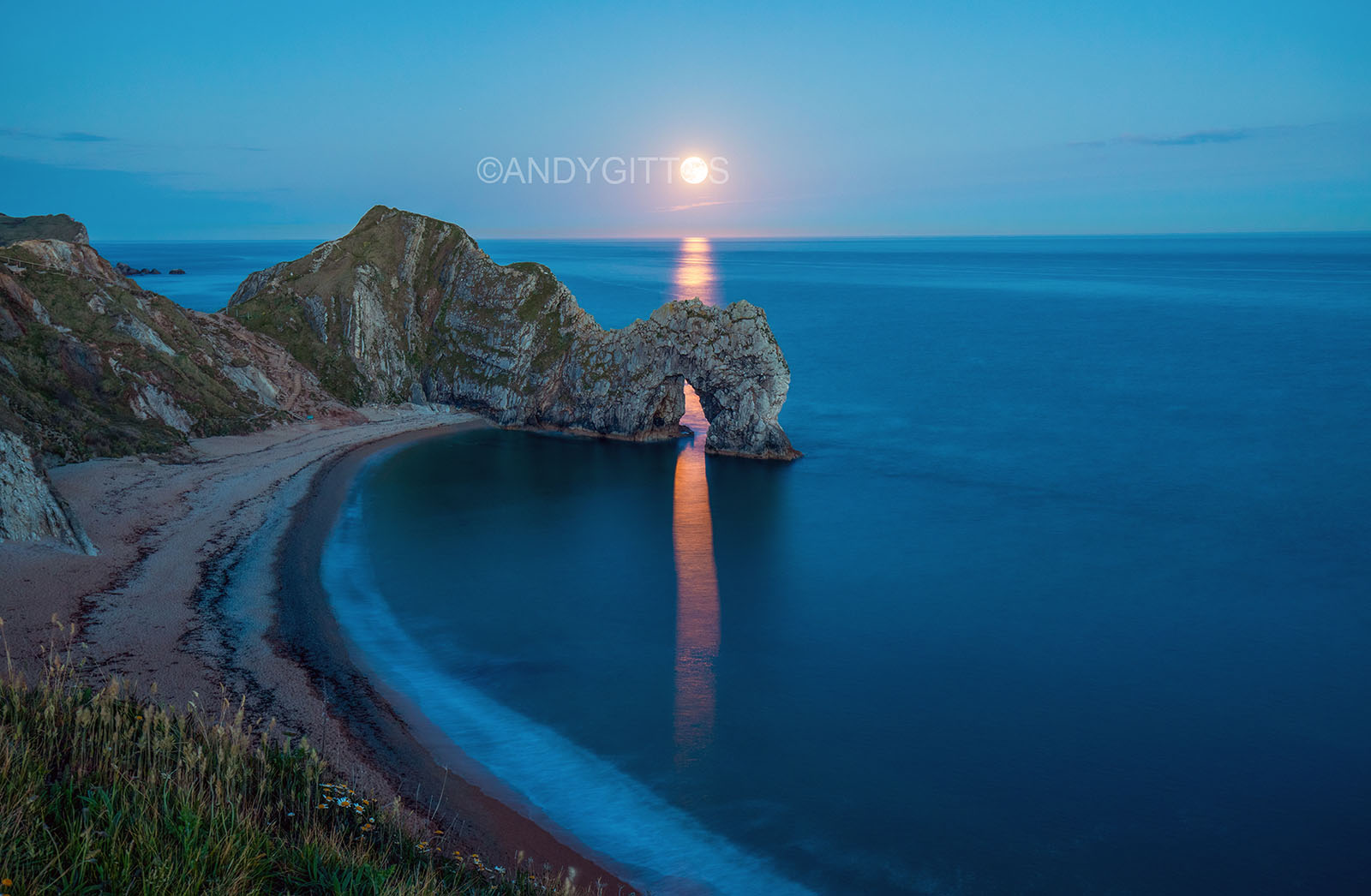
On the evening of Wednesday 26 May 2021, I stood at Durdle Door in Dorset and watched a supermoon rise above the arch, hoping the moon, the arch and the weather would all play along. They did. The result was a single frame I called “GoldenEye”, and by the autumn, it was the cover of the BBC Countryfile Calendar 2022.
The natural phenomenon that needed a miracle
Getting the shot meant an absurd number of coinciding events, and no small amount of luck.
A full moon only happens once a month. One that aligns perfectly with Durdle Door happens only a handful of times a year. And a supermoon falling in exactly the right set of months is rarer still, maybe once every two or three years. Yet somehow, all three lined up within the few days my wife Katie and I happened to be in Dorset, on a short break we’d booked with no idea a supermoon was even coming. Stacked on top of all that, we also got a perfectly clear sky, and given UK weather, this was arguably the least likely event of the lot. Take away any one of those and there’s no photo. Then add the small matter of actually being there to take it.
Durdle Door is one of the busiest tourist spots in the UK, and that day was no exception. But as evening came, most of the crowds packed up and went home, many before the sun had even set. The few who stayed for sunset had no idea what was coming, and by the time the moon rose, Katie and I were completely alone.
I hadn’t even planned for what actually made the photo. I went hoping for the moon and the arch together, a decent shot on its own. But as the moon climbed higher, it cast a shimmering column of reflected moonlight straight through the door itself. Katie and I both sensed we were witnessing a natural phenomenon. She rarely comes out on shoots with me, so having her there was special. That it was this shoot made it a night neither of us will ever forget.
Taking the shot
I used the wide end of my 16-35mm lens because I wanted all of Durdle Door in the frame as well as the moon. The camera sat on a tripod, and to avoid any shake I used the two-second timer and fired it from the touchscreen rather than pressing the shutter.
I arrived about an hour before sunset, thinking the view might make for a decent sunset shot too. It did, but it was nothing compared with the moonrise that followed. Sunset was just after nine and the moon didn’t clear the horizon until around 9.30pm.
Even then, there was no reflection at first. It only appeared once the moon had climbed a little, and the frame that won was taken closer to 10.30pm, more than an hour after moonrise. Capturing detail in the moon takes a fast shutter speed, but water rewards the opposite. A long exposure smooths away every ripple, an effect you can’t see with your own eyes, so once the reflection started to form I switched my attention to it.
It was Katie who first noticed the reflection lining up with the gap in the arch. I was reluctant to move the tripod at first because it would spoil the time-lapse, but I quickly decided the shot mattered more. I repositioned several times, and you can see every move, and the wait for the reflection, in the clip. Some of the best frames came later still, as the moon climbed and the reflection began creeping round the arch as well as through it.
The photo at the top of this page is a composite, with the moon properly exposed. The Countryfile competition doesn’t allow composites, so I entered a single 13-second exposure (f/8, ISO 800, Canon 5D Mark IV, no filters). In that version the moon is overexposed into a golden glow, and it’s the one on the calendar cover. I like it in its own way.
The competition
Every year, the BBC TV show Countryfile runs one of the biggest amateur photography competitions in the UK, which produces the following year’s charity calendar in aid of BBC Children in Need.
The 2021 judges were John Craven (a British TV legend), Simon King (wildlife cameraman and presenter) and Cerys Matthews (musician and broadcaster). They picked twelve finalists to make up the calendar. From those twelve, the overall winner would be chosen by public vote, with a separate “judges’ favourite” prize decided by the panel itself.
Even though I knew I’d captured something extraordinary, entering wasn’t actually my idea. It was my mum and a friend who both suggested I put it into the Countryfile competition. The competition’s theme that year was “Miracles of Nature”, and while I can’t imagine a more perfect match between a photo and a theme, I doubt I’d have entered it at all without them saying something. I’m glad they did.
Entering meant giving the photo a name, I think because that’s how each picture is identified in the public vote. I’ve always loved James Bond, and GoldenEye most of all, and the overexposed moon and golden beam on the water reminded me of the film’s satellite weapon firing. It helped that the arch is shaped like an eye. So “GoldenEye” it was.
Making the final twelve
In early August 2021, a researcher from Countryfile emailed to tell me my photo had “made it onto our short list from over 46,000 images”, though the final twelve hadn’t been decided yet. On 22 August, Katie and I sat down with our fingers crossed to watch them revealed on air. Seeing my photo appear on TV for the first time was a real thrill.
A handful of messages arrived after the broadcast, outing the few of my friends who actually watched Countryfile. Most people heard about it on social media or from someone else. The Countryfile calendar is well known in the UK, so the news meant something to most people, even if they weren’t regular viewers. Many then set about drumming up votes on my behalf, my sister and close friends among them. I was touched by how many people got behind it, and by the kind things they said along the way.
A routine interview
In early September, I got a phone call from Countryfile to say all twelve finalists would be interviewed. The public vote had already closed, which made a separate interview with every finalist seem unlikely. I started to suspect they might be setting up to tell me I’d won. They asked me to suggest somewhere local to me where I regularly shoot, and I put forward Brent Reservoir and Gladstone Park.
The interview was filmed at Brent Reservoir on 16 September 2021. If I was right, the crew gave nothing away. They ran it exactly like the routine finalist interview I’d been told about, the same one, supposedly, that all twelve of us were getting, with no hint that they knew the result, or that there even was a result yet. One of them even asked me, apparently just making conversation, which photo was mine. Despite my suspicions, that one question threw me completely. Surely if I’d won, they’d know which photo was mine? From that point on, I bought the act.
The interview then went on far longer than I’d expected: more questions about the photo, more takes, the same ground covered again and again. Meanwhile, Katie’s mum, watching Katie’s location on Find My Friends, could see she’d been standing at the edge of a reservoir for an unusually long time and started trying to call, repeatedly, with no idea what was actually going on. Katie could feel her phone buzzing in her pocket the entire time, while we were mid-interview, trying to answer questions as if nothing was happening.
The reveal
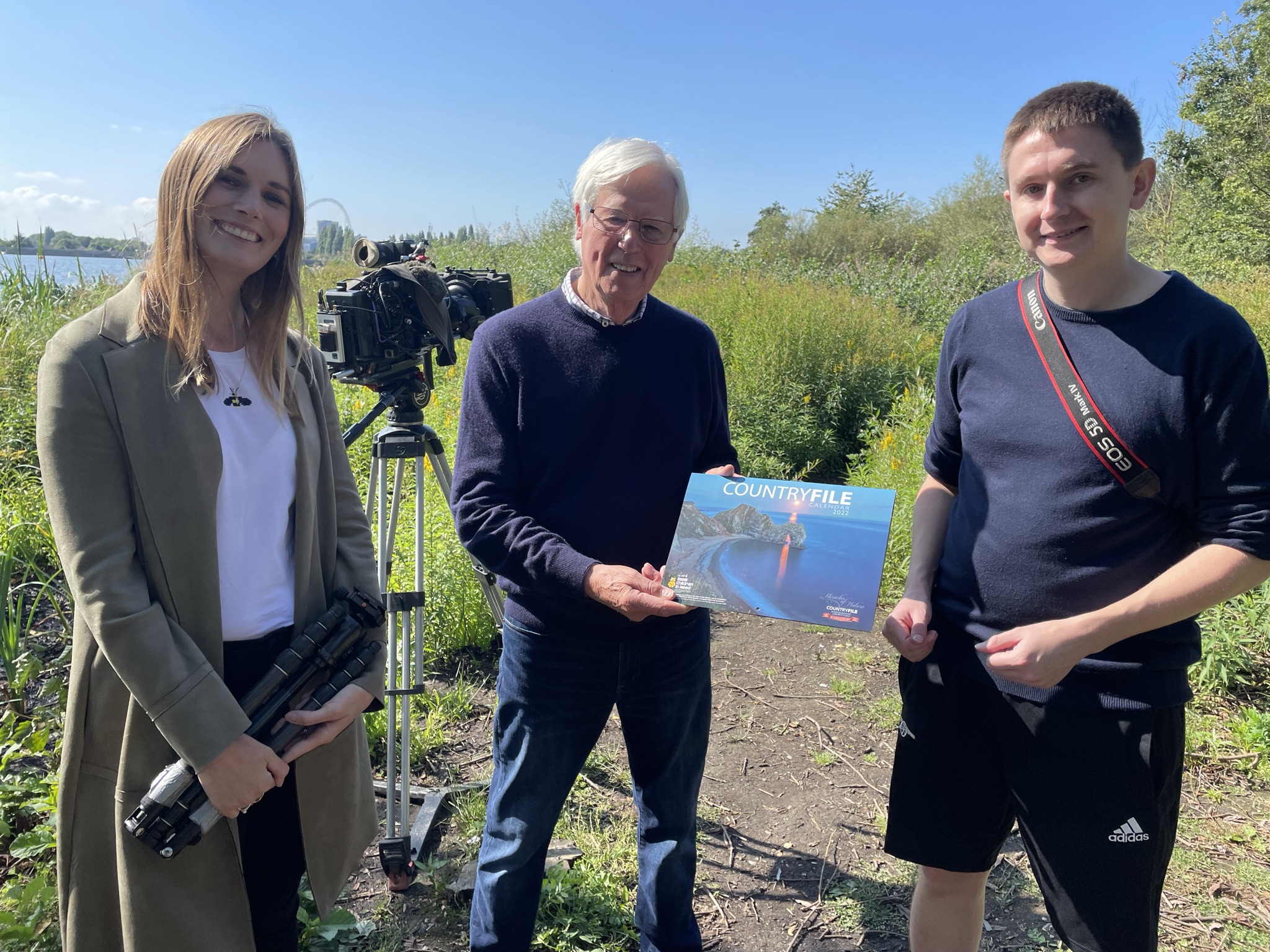
Eventually, John Craven turned up in person and surprised Katie and me with the news: GoldenEye had won both prizes, the public vote and the judges’ favourite. As far as I can tell, that double win doesn’t happen every year; most years split the two. The drawn-out interview had probably left me more flustered for the actual reveal than I’d otherwise have been.
Throughout, John Craven called me “Andrew” rather than Andy, and Katie “Kate”, even though the crew had told him our preferred names. Both slips made it into the aired episode too. We weren’t about to correct a national treasure twice.
View this post on Instagram
After the surprise
Afterwards, the crew explained that John Craven had been held up on his way to us, and they’d been stalling until he arrived, which was why they’d kept repeating themselves. The main cameraman even admitted he’d found the whole act hard to keep up, to the point where he’d avoided speaking to me directly until after the reveal.
Looking back, I can’t fault any of it. The stalling and the repeated questions were all there to protect the surprise, and the crew had to keep it going far longer than planned. Once it was over, it turned into a really enjoyable afternoon. A crew member nipped out to a nearby garden centre for sandwiches, and Katie and I ate them with John Craven and his daughter. The crew were incredibly generous, offering us a look behind the scenes and the large print of my photo that featured in the episode.
I also found out why Brent Reservoir had been chosen over Gladstone Park: it was far less likely that passers-by would spot the crew and leak the result before the episode aired. In the end I was glad. It put a less well-known spot on screen, and the crew got some great drone shots of Wembley Stadium from the water, which felt fitting given how much of my work is built around it.
On air
The reveal went out a few weeks later, on Countryfile on Sunday 3 October 2021. We’d had to keep both the win and the filming itself quiet until then. More of my friends and family tuned in this time, though I suspect for the result rather than the programme. Most of the reaction still came through social media once I’d shared the news, and it was great hearing from such a mix of people, including some I’d never have expected.
That same week, Maggie O’Neill, a radio presenter on Purbeck Coast FM, asked me to be a guest on her show. I warned her that chatting isn’t my strongest attribute, but she told me it went down well with listeners. I’ll have to take her word for it: I missed the broadcast and the repeat, and never did get hold of a recording.
The calendar then had to be sold, and Countryfile kept at it for the rest of the year. There were ten separate reveals of the cover, most of them silly. Joe Crowley did most of the honours, and once fished the calendar out of Newlyn Harbour with a rod. John Craven usually left that sort of thing to his co-presenters, but my favourite was the time he pulled on a pair of gauntlets and coaxed the calendar out of a cage, as if it were a bird that didn’t want to come out. It was often cringeworthy, and I loved it. However daft the set-up, seeing my photo on TV again never got old. A few of my mates even got in on the act, filming reveals of their own.
Even Wormsley Estate, where the judging took place, joined in. Their Instagram post picked up on the 007 in the photo’s title, and their story at the time went one better with a Pierce Brosnan GIF.
What that actually meant
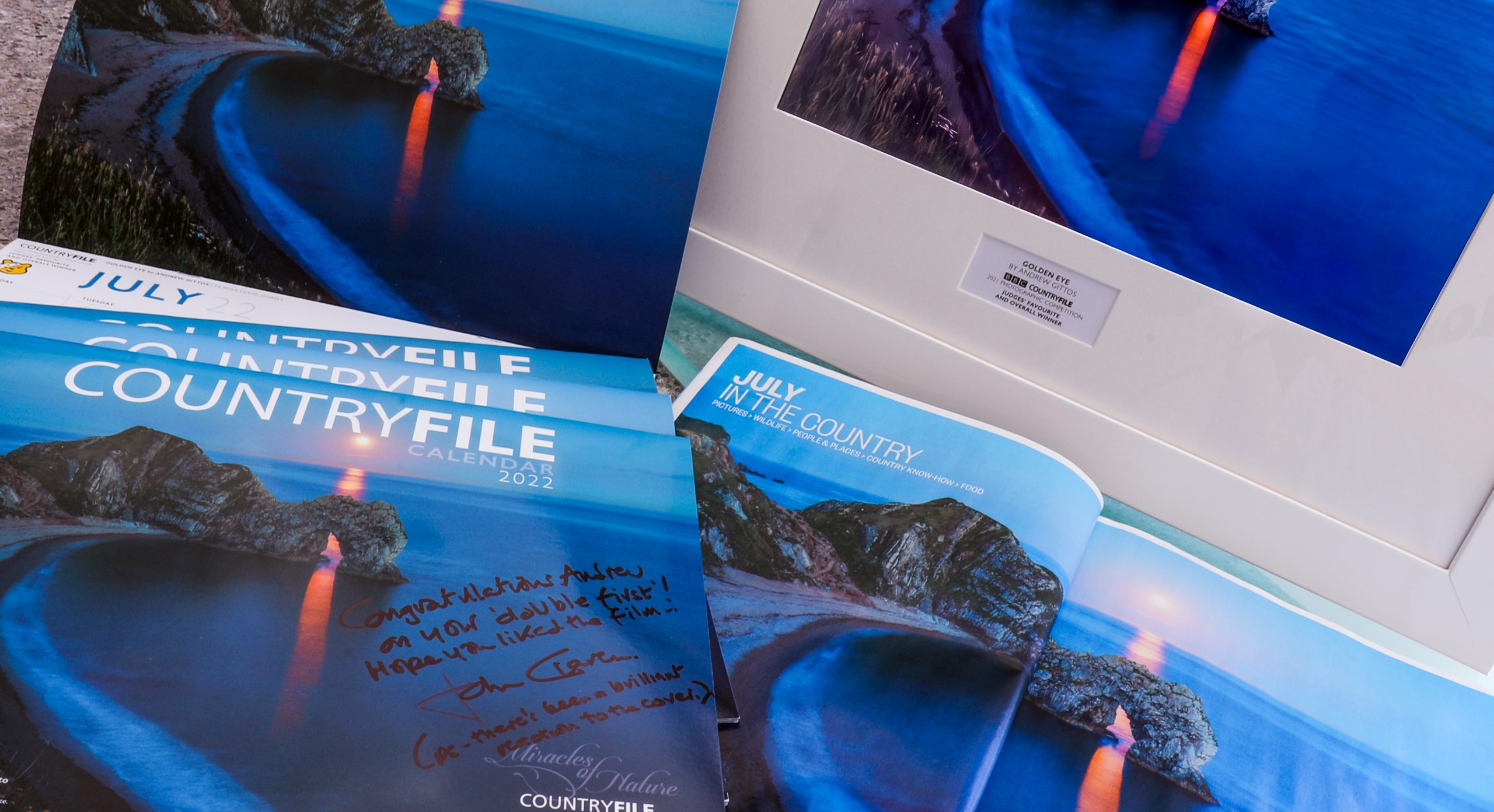
Winning both prizes also came with £1,500 in vouchers: £1,000 for the public vote and £500 for the judges’ favourite. They were supposedly for photographic equipment. The catch was that they could only be spent in certain high street shops, and the closest any of them came to a camera shop was Argos. The BBC also sent me a framed print of GoldenEye with a plaque confirming the double win, along with a copy of the calendar signed by John Craven. The following summer, BBC Countryfile Magazine asked if they could run the photo, and it appeared as a double-page spread in the July issue.
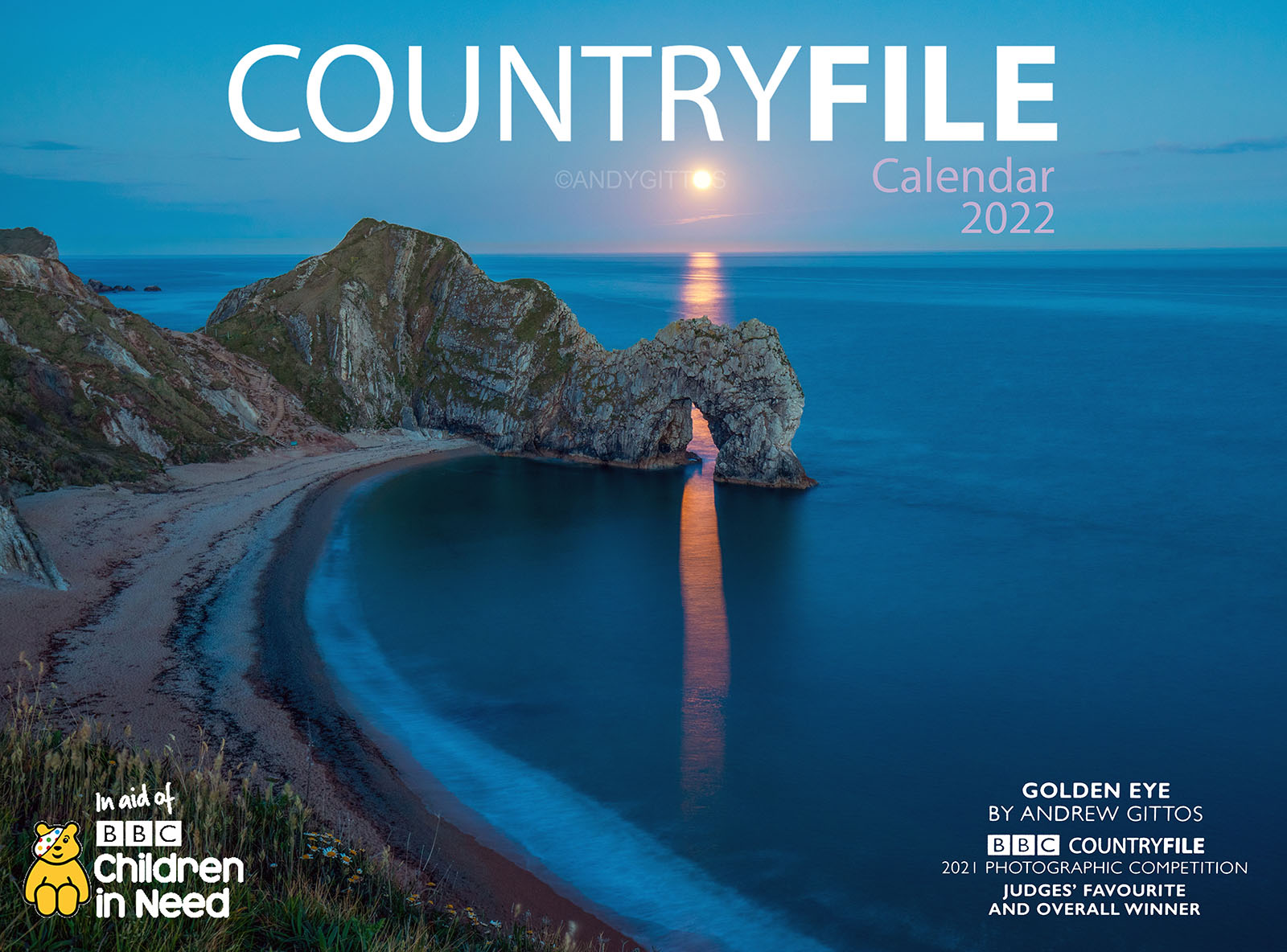
The public-vote win put GoldenEye on the cover of the Countryfile Calendar 2022. The calendar itself went on to raise more than £2.9 million for BBC Children in Need, which, if you do the maths on the minimum £4.75-per-copy donation, works out to roughly 610,000+ copies sold. GoldenEye also had a month of its own inside, and when friends started sending me pictures of it at the start of July, it dawned on me that more than half a million people had my photo of Durdle Door hanging in their kitchen.
My dad included. The competition had been going for 30 years by then, and he’s had the calendars up on his wall for as long as I can remember. We’d often admire the photographs. I never expected to see my own work among them.
Looking back
I haven’t been back to Durdle Door since that trip in May 2021, which, looking at everything that had to line up to make the photo possible, feels less like an oversight and more like an admission that I know I’m unlikely to get that lucky twice. It wasn’t the most technically difficult shot I’ve ever taken. But between the reflection I never planned for, an appearance on TV, and a calendar that raised £2.9 million for charity, it’s the one with the best story.
Related: you can see GoldenEye in my Dorset gallery and the rest of my UK work in UK & Local, or find out more about me on the About page.
On Instagram: my original post of the photo, from before Countryfile was involved; a time-lapse of the moonrise; the post announcing the win; a reel of the time-lapse with stills of all the Countryfile reveals; and Wormsley Estate’s 007 post. There’s more in my story highlight, including posts from Countryfile’s own accounts and the photos people sent me of the calendar in their homes.
Sources and references
- The competition segments: I put the Countryfile segments about the competition together in one video, including the ones I appear in. Watch on YouTube
- The finalists episode: Countryfile, “Offa’s Dyke Path”, BBC One, Sunday 22 August 2021, in which the twelve finalists were revealed and the public vote opened. The episode isn’t currently available to watch. BBC programme page
- The winner reveal episode: Countryfile, “Cumbria”, BBC One, Sunday 3 October 2021, in which John Craven surprised Katie and me at Brent Reservoir. The episode isn’t currently available to watch. BBC programme page
- Calendar reveals: the cover was revealed ten more times in later 2021 episodes, including Harvest Special (10 October), Newlyn (31 October), Staffordshire National Memorial Arboretum (14 November), Compton Verney (28 November), Kielder Forest (5 December), Countryfile at Christmas (19 December) and Christmas Traditions (27 December). I’ve put short clips of the reveals together, along with the ones my mates made: watch on YouTube
- Magazine feature: “July in the Country”, BBC Countryfile Magazine, July 2022 issue. Preview on Zinio
- 46,000 entries: the figure given in the email I received from Countryfile, and quoted by John Craven in the winner reveal episode.
- 30 years of the competition: John Craven described 2021 as the competition’s 30th anniversary in the finalists episode.
- £2.9 million raised: the BBC’s page for the following year’s calendar vote says “Last year, with your help, the calendar raised more than £2.9 million.” The page is titled “Countryfile Calendar Vote 2022” but covers the 2023 calendar, so “last year” is the 2022 calendar. BBC: Countryfile Calendar Vote 2022
- £4.75 minimum donation per calendar: from the BBC’s ordering page for the 2022 calendar. BBC: How to order the Countryfile Calendar for 2022
- 610,000 copies: my own estimate, £2.9 million divided by £4.75. The BBC hasn’t published a sales figure.
Leave a Reply